Thursday, August 30, 2007

Irregular Rhythm Asylum in Tokyo

IRREGULAR RHYTHM ASYLUM (IRA):
An infoshop called Irregular Rhythm Asylum was opened in Shinjuku, Tokyo in January 4th, 2004! You will find not only vinyls, CDs, fanzines, books, T-shirts, and other goodies, but also alternative and independent information. If you live in Tokyo metropolitan area, please come over and talk to the staff. After its closing time, small events like film showing, exhibitions, acoustic music, and so on will be held in the future. If you have some nice ideas, please let them know.
Irregular Rhythm Asylum Open 13:00 - Close 20:00
1-30-12-302 Shinjuku Shinjuku-ku, Tokyo 160-0022, Japan
Tel/Fax: 03-3352-6916 (domestic); +81-3-3352-6916 (from abroad)
http://a.sanpal.co.jp/irregular

Tuesday, August 28, 2007

Remo Has Left Festival Gate

REMO-Record, Expression, Media Organization-- is a media center in Osaka. Their mission is to : "provide activities that act as a conduit for the organic flow of research, experiment, development and practice by exploring and reviewing issues presented via media." Kazuya Sakurada is one of the most active members of Indymedia Japan and curated many REMO workshops. Tetsuo Kogawa conducted a transmitter building workshop in 2005, in which 13 transmitters were built. The workshop participants were an amazing mixture: a retired teacher, a poet, a homeless man, a childcare worker and several artists. As each transmitter was finished, workshop members walked around the loft-like space speaking, singing, laughing into mikes connected to their mini-transmitters. It was a glorious evocation of Brecht's dream of each person a tranmitter.
The center was in a failed mall called Festival Gate, located in the area of Osaka known for pachenko parlors, homeless campouts and drug exchange. Attempting to upgrade the district and overcome its seedy reputation, the city subsidized the building of a large mall, similar in colorful design and playfulness (a roller coaster ran through the center of it) to Horton Plaza in San Diego. When Festival Gate didn't attract enough tenants, the city turned many of the spaces over to arts organizations, hoping for "civic uplift" by the arts. So for a few years the arts did thrive there. REMO presented media workshops and performances. Nov Amenomori is one of the founding members of REMO, organizing Breaker Project [breakerproject.net] in the streets, and Kanayo Ueda doing poetry readings at a cafe (Cocoroom) next door.
But the attempt at art gentrification couldn't really change the basic condition of the depressed neighborhood. The empty roller coaster roaring through the mostly empty space came to symbolize the lonely plight of the creative individuals who were trying to keep their cultural organizations alive.
In June REMO held their last event at Festival Gate. The Festival Gate will be torn down to make way for the city's next attempt at "urban renewal" in the area.

Remo's future plans include:
* 2 weeks public space media installation with an artist from Thailand from the end of September just in front of the Osaka Central Station
* 2 weeks indoor media art festival and/or media activism teach-in from the end of year to the first half of the next January in a white cube in a city central which is used for museum preparation.
There is still some negotiating with the city government for an alternate site.

Meanwhile the Japanese government is moving to control the internet. http://web.mac.com/ellenycx/iWeb/CSM%40remoPodcast/Blog/F878290E-243B-4BD0-B46B-36D6CB69BFD5.html Under the guise of controlling "cybercrime" the authorities are attempting to put the Japanese internet on a "business" basis.

EngageMedia


Happy Valley is a beautiful area of native bush, fragile wetlands and a thriving ecosystem of native birds and animals located on the West Coast of New Zealand, just North East of Westport. It is home to many threatened species including the Great Spotted Kiwi and the large native Patrickensis land snail.... and it is under attack from state-owned enterprise Solid Energy!(From a video on the EngageMedia website.)

EngageMedia is a video sharing site distributing works about social justice and environmental issues in South East Asia, Australia and the Pacific. It is a space for critical documentary, fiction, artistic and experimental works that challenge the dominance of the mainstream media. The growth of digital distribution tools mean distributing video online has become a viable option for artists and activists looking for ways to get their work out there. Huge potential exists within these new technologies to bypass the control of big media conglomerates and create our own distribution channels.

EngageMedia aims to demystify and provide access to these new technologies, create an online archive of independent video productions using Creative Commons licenses and form a peer network of video makers, educators and screening organisations. Full Project Brief Our core aims are
* To assist individuals and groups producing thought-provoking and
informative media focused on social and environmental issues
distribute their work.
* To develop the digital media and Internet skills of independent
video makers and marginalised communities.
* To foster a regional network of producers, to assist each other in
producing and distributing their work in the South East Asia and
Pacific region.
* To produce an online video delivery platform under a free software
license that others are free to use and modify for their own media
projects.

OK.Video Militia Workshops


OK.VIDEO MILITIA WORKSHOPS by Anna Helme —2007-07-16
EngageMedia has partnered with the OK.VIDEO Militia Jakarta International Video Festival at the National Gallery of Indonesia to distribute the festival videos online, present an online video training for video artists and participate in a discussion about video activism. This article by Reza 'asung' Afisina, the Workshop Program Coordinator, explains the objectives of the OK.VIDEO Militia series of video workshops conducted in various towns and cities in Indonesia, capturing the 'quintessence' of each area by asking participants to explore their own questions about their social, political and physical surroundings using the medium of video.

OK.VIDEO MILIITA WORKSHOP Videos from the workshops are listed here to watch and download from EngageMedia:
http://www.engagemedia.org/ok-video-militia/

[ENGLISH] OK. Video Militia workshop has the objective to empower the people, by using the video as a medium for expression, for research, and for reflection on the social phenomena. Therefore, the workshop also develops the "quintessence" of each city and town where the workshop is held. We conducted simple researches about the places, regarding the physical aspects or, especially, the socio-cultural aspects, to gain some descriptions about them. We then present the many problems we found to the participants, we re-present them --is it true what the mass media and many people have been thinking about their place of residence? We then asked the participants to explore questions that had never been posed about their environment, and we then developed these questions together and discussed how to present those questions and problems using the medium of video.

Prior to that, we have prepared workshop modules, which we designed to be presented in seven days. The modules consist of an introduction to the history of video, its relevancy to the socio-political and cultural situations, and also about the OK. Video festival which ruangrupa holds every two years since 2003. There are also modules about the introductions to the technical aspects of the video and also about a simple editing process.

Many participants thought that to make a video work they had to be able to do some video editing using the computers, something that they still found difficult. Here we only came up with very simple editing concepts, because we preferred to develop editing concepts that are out of the technical aspects, i.e. how to develop an idea using the characteristics of the video medium. However, in some places where the participants had not been familiar with the context and technical aspects of the video medium, we presented our modules in reverse, i.e. we delivered the technical introductions first, then the theories. That was why we had to create flexible modules.

The interesting thing in the workshop was to see how the participants intimately play around with the videos. They tested the medium first prior to deciding whether their ideas would be suitable for, say, the camera in a mobile phone, which turned out to have such a low resolution that would be difficult to transfer; or they wondered what if they used the technique of stop-motions as a simple animation technique. They knew that each video-based recording equipment has its own characteristic that must be adapted to their ideas. Many participants then decided to collaborate to develop their ideas, and a lot of fresh new ideas emerged during the process. Many of the participants found distinct visual styles that are able to describe their cities using various approaches, whether as documentary works, simple animations, statements, or a play of visual imagination.

The participants had actually known their towns and cities very well in their daily lives, it is now just how to help them own the awareness to 'record' these cities. We challenge them to keep trying all the technical possibilities of the video using many recording media, introducing various ways of 'recording', from the simplest one like writing a daily journal, notes, sketches, up to video recording. The awareness to 'record' would be able to help them express their critical attitude in observing changes, turning them into new forms of expressions, thus enabling these participants to know and adapt better to the changes and then pose these questions again using the medium of video, which would then trigger more forms of expressions in never-ending explorations.

[BAHASA INDONESIA] Workshop OK. Video Militia ini bertujuan memberdayakan masyarakat, dengan menggunakan video sebagai medium ekspresi, alat penyelidikan, dan refleksi atas fenomena sosial. Karena itu, workshop ini juga mengembangkan "inti karakter" setiap kota tujuan workshop. Kami melakukan penelitian sederhana mengenai kota, baik secara fisik maupun, terutama, kondisi sosial-budayanya, demi mendapatkan gambaran karakter kota itu. Berbagai permasalahan yang kami temukan kemudian kami tawarkan kepada peserta, kami sandingkan kembali --tepatkah pemberitaan media massa maupun anggapan banyak orang mengenai kota mereka? Kami lalu mengajak peserta untuk menggali sejumlah pertanyaan yang selama ini tak pernah diungkapkan tentang lingkungan mereka, lalu kami kembangkan bersama, bagaimana mengangkat ragam permasalahan itu melalui medium video. "Video sed non credo" / "I see it, but I don't believe it"

Reza 'asung' Afisina, Workshop Program Coordinator OK. Video Militia - 3rd Jakarta International Video Festival 2007

The Difference between Journalism and Communication

Alfonso Gumucio Dagron defines "communication". This interview was made in the Deep Dish office in New York City. Gumucio's new book, Communication for Social Change, co-authored with Thomas Tufte, is a collection of historical and contemporary readings that look at communication and development. Alan Alda has said about the book, "This idea is flowering at just the right time because it is becoming increasingly clear that communication that doesn't go both ways doesn't go anywhere."

Gumucio's article about social change and media (in Spanish) is at http://www.geocities.com/agumucio/ArtMosqueteros.html

Saturday, August 25, 2007

Indigenous Media in the Mexican Isthmus

Bertha Rodríguez Santos (Chatin) is a filmmaker and freelance reporter for U.S. and Mexican news organizations. From 2002 - 2005, she was the media coordinator of the indigenous communications program of the Uníon de Comunidades Indígenas de la Zona Norte del Istmo (UCIZONI), an advocacy group for Native communities in the Isthmus of Tehuantepec, in Oaxaca, Mexico. At UCIZONI, she and Violeta Chavez co-directed four documentaries, including La Tierra Es Nuestra Esperanza, winner of the 1st Place Award for the Defense of Indigenous Rights at the 2004 Festival Internacional de Cine y Video de los Pueblos Indígenas in Santiago, Chile. As UCIZONI media coordinator, Rodríguez helped found the community radio station in San Juan Guichicovi, which broadcasts in Mixe and Spanish. She also has reported for media groups in southern California, Mexico City, and Oaxaca. Rodríguez received her BA in journalism and collective communication from the Escuela Nacional de Estudios Profesionales, Aragón- UNAM, in Nezahualcóyotl, Mexico. She grew up in Mexico in Palomares, Oaxaca, and lives in Los Angeles, California.

"We want media that inspires creativity, that goes to the root of what it means to be human, that questions, that includes the participation of everyone, that incites us to abandon our comfortable role as spectators. We want media that gives voice to those at the bottom, the community, or better yet, that the people be the ones to take over the television channels, use the radio stations, make their own videos, transform the walls, make their own presses, invade the theaters, appropriate the Internet, occupy the pages of the newspapers to say the truth, as they are now doing in all the country, even on the other side, and that more than anything, that they teach us, like our colleagues in Oaxaca."
--From Native Networks http://www.nativenetworks.si.edu/eng/rose/rodriguez_b.htm

Thursday, August 23, 2007

Molo Songololo

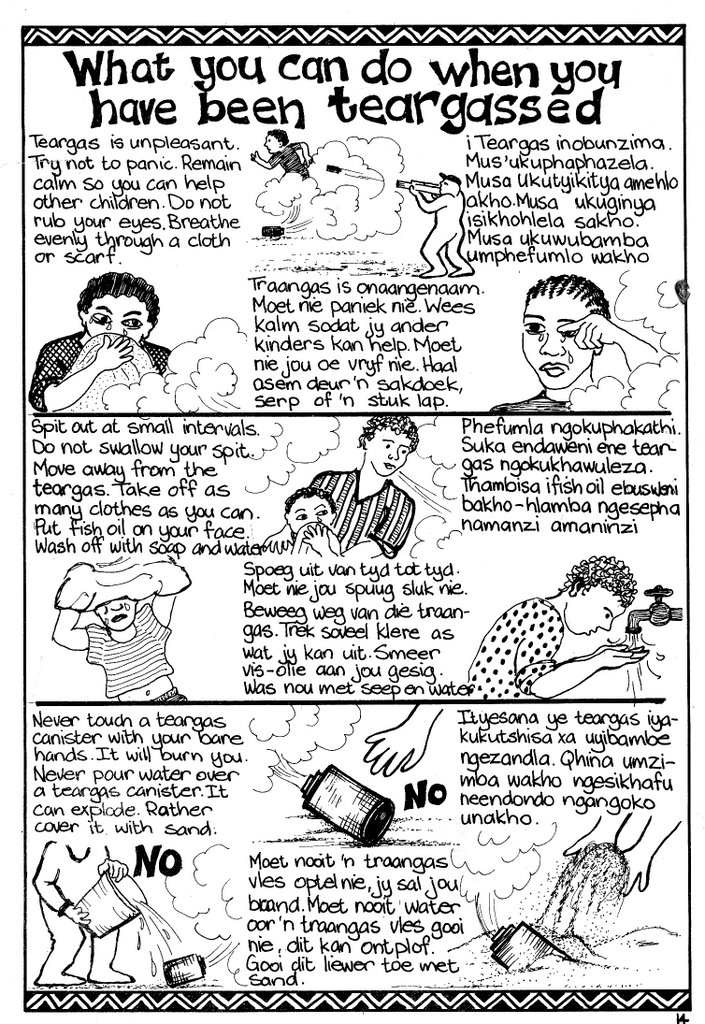
Molo Songololo is a South African children's magazine was started during the Apartheid years. It was in three languages: English, Xhosa and Afrikans. One of their articles was about how to protect yourself from teargas.There is now a television program that evolved from the magazine. This is from their web page:
"One of the central partners in The Molo Show is a Cape based children's organisation that was established in the 1980's. For the past 17 years they have focused their energies on children's rights issues and education. Molo Songololo's current magazine distribution is predominantly in in the urban and peri-urban areas of the Western Cape. School teachers use the magazine as an educational resourse and Molo Songololo issues Educational Manuals based on specific themes. The Manuals consist of educational topics, social issues, history, activities, pazzles and games.

Molo's growth has partially been linked to a deep commitment to seeing real development for children in the socio-political arena. As an organisation dedicated to children, Molo Songololo ensures that the voices of children -especially those from the poorer socio-economic backgrounds are heard. At present, Molo Songololo is distributed predominantly in the Western Cape. The magazine has the potential to grow nationally as a vehicle for education."
There is a wonderful discussion of the importance of this little magazine during the apartheid struggles. It was discussed in the hearings for the Truth and Reconciliation Commission: http://www.doj.gov.za/trc/special/children/claassen.htm

Wednesday, August 22, 2007

Radio Rootz

Renaissance Village is the largest FEMA trailer park in the country with over 500 families (built by The Shaw Group, a large Louisiana firm cozy with Bush, on a no-bid contract after Katrina). The residents are understandably distrustful of outsiders, especially journalists. But there is an amazing youth center there and Abdulai Bah and Deepa Fernandes from People’s Production House have, over time, been welcomed into the park’s community as allies. This is a short video made by Big Noise Films producer, Jacquie Soohen, shot and edited in one day.
For more information http://breitbart.wordpress.com/2007/08/21/peoples-production-house-in-new-orleans/

Friday, July 27, 2007

ALLIANCE FOR COMMUNITY MEDIA

The Alliance for Community Media is holding their annual conference in Minneapolis.Lauren Glynn Davidian received the George Stoney award for her work with Chittenden Community Television in Burlington, Vermont, and for her leadership in community media at the state and national level. A workshop on youth media was lead by Andrew Lynn and played to a packed room. Andrew works at Manhattan Neighborhood Network which is pioneering an exchange of youth media using the internet.TO SEE A SHORT VIDEO ABOUT THE NETWORK WHICH WAS MADE AT THE ALLIANCE FOR COMMUNITY MEDIA CONFERENCE and some cool youth projects, SEE http://damnyc.blogspot.com/

Tuesday, July 24, 2007

MEDIASHED.ORG


MediaShed is the first "free-media" space to open in the east of England. It's a place where members can come hang out, learn, propose some training, create and propose new projects using free-media or show things they have made on one of our screening nights. The MediaShed is designed to be as open and accessible as possible, welcoming.

One of their projects are making surveillance camera movies.

Free-media: is a freebie - doesn’t cost much, especially to the people who need it most and can afford it the least;
doesn’t cost much because it makes use of the public domain, Free and Open Source Software (FOSS) and recycles freely available old equipment, waste materials and junk;
sets you free by giving you the ability and confidence to do things for yourself, promoting independence, self-reliance and the exercising of free choice;
is media that is open, transparent, unrestricted and outside proprietary controls, so you can freely change it, rewrite it or rebuild it to suit yourself;
supports the free exchange of ideas and opinions to help build a more democratic society;
is free to help you when you need support, advice, are looking for someone to collaborate with or just fancy a chat;
The MediaShed now has over 100 members and has run workshops, several screenings and exhibition events and completed its first public project “Video Sniffin” for the “Being Here” event in April.

Tuesday, July 17, 2007

OPEN CHANNEL-FOUR DECADES IN MELBOURNE

OPEN CHANNEL grew from the origins of Melbourne Access Video and contributed towards the establishment of community television broadcasting in Australia.

Highlights 1974 - 2007 is a 9 minute snap-shot of stories from indigenous and women's communities, occupational health and safety issues, stories from various union struggles, nuclear disarmament... OPEN CHANNEL was and continues to be open for everyone! To see this compilation go to:http://openchannel.org.au

Saturday, July 14, 2007

Native Hip Hop

Los Angeles-based Cihuatl Tonali is a powerful female lyricist group that combine feminine energy with political, cultural, social and economically charged lyrics. This picture is from their myspace page. http://profile.myspace.com/index.cfm?fuseaction=user.viewprofile&friendid=9108101

Thursday, July 12, 2007

Community Media Survey

Payumat Radio, Colombia

As part of the Waves of Change project, Deep Dish is initiating a Community Media Survey. Please print out and distribute to community media groups in your region. They can respond via email to deepdish@igc.org or in the comments section of this blog or mail to Deep Dish 339 Lafayette Street, NY NY 10012. We hope that some groups will video or audio the answers as part of "self portraits" to be included in the DVD series and this blog.

Community Media Project Survey
1. Tell us about your community and your media project.
2. What are some of the general characteristics of the community, geographically, economically, etc?
3. Describe what you do and how that has evolved.
4. Give a history of how this project was initiated and developed.
5. Show or describe your infrastructure: describe the place you work, the equipment you are using, the kinds
of tools, and the people that work with the project, either directly or indirectly.
6. Describe the sorts of content you create.
7. What community needs does the content fulfill?
8. How does the wider community interact with this project?
9. How do you measure success in terms of the project and its advancement of community goals and objectives?
10. What is the organizing structure of your media project?
11. Is your project tied to a particular social organization or is it independent?
12. How are decisions made?
13. Is there a training component?
14. What sources of funding do you have?
15. Is there a commercial component to your work?
16. How is this project sustained?
17. What relationship does your project have with the government, local, national or otherwise?
18. What outreach is in place? (Give examples)
19. How has the internet changed your practice (or not)?
20. Are you formally connected with other community organizations and/or institutions (i.e. schools, churches,
political parties, political movements)?
21. Are you connected with any national or international NGOs?
22. How is your organization responsive to specific community needs? Give examples.
23. How has the communication project enabled community development?
24. What are the long-term goals of this project?
25. What kind of outside assistance, both monetary and/or technical, do you depend on?
26. In what ways do you preserve (or transform) local culture?
27. How does your project differ from others in your geographical area?
28. What other media are there in your immediate area?
29. How does your project compare to other similar media projects on a national level?
30. Is access/participation in this project done on an equal basis, or is it only available to members or people with
specific skills or interest in specific issues and points of view?
31. Is your project goal based on campaigns, or on a more general consciousness-raising basis?
32. Do you see yourself as part of a wider community media movement? In what way?
www.deepdishtv.org

Wednesday, July 11, 2007

THE STRUGGLE FOR FREEDOM OF EXPRESSION IN SOUTH AFRICA

From Mzansi, Indymedia Joburg Publication
SABC: A VOICE FOR THE PUBLIC
OR A VOICE FOR THE STATE?
by Mpumi Magwaza
The Freedom of Expression Institute (FXI) facilitated a march to the public broadcaster (SABC) on the 16th of November 2006. The march included local social movements and traditional healer's organization. The focus of the protest was around the ever-big question of whose interest is SABC serving--the public or the private? The question is brought about by the biasness of the SABC especially with regard to the government's interpretation of public opinion. On the Traditional Healers side the outcry is the broadcaster's promotion of beliefs other than traditional African religions and that in South African television cultural programmes are seldom featured.

According to FXI this has been a long and tough debate mainly because the SABC has lost its accountability as a public broadcaster. FXI's approach to this campaign is to make sure that the SABC and other forms of media in South Africa remains to serve the public. According to the South African constitution everyone has the right to freedom of expression and access to information - both radio and television should serve that right as they are the most accessible. But this has failed to happen as ordinary people still feel that the SABC is serving the few, particularly the ANC which is the ruling party. They typically feature on the news bulletin every night. It is evident that the SABC has shifted its focus from a nation builder to a corporation. Over the past years SABC has adopted profit-making strategies, as most programming is exchanged with commercialization. Revenue has became more important than content. This by the way points directly to the steps of how globalization can manipulate such structures. Given that the demand of profit over content, the public becomes less important as it does not bring in any revenue. The question of the SABC's independence as a public service has been scrutinized by such campaign, that is the reason why debates on whether this corporation still makes it as a public entity still remains.There have been many other instances that have put the SABC on the spot: corporatization has been most visible through the changes in programming and a greater focus on advertising as the main source of revenue. The latest scandal on the blacklisting of political commentators and the canning of a documentary on President Thabo Mbeki has indicated that the SABC lacks its independence and serves the few and not the population as a whole. Just recently, the SABC paid R123,000 to the Leader Magazine to feature a profile on the Group CEO of the SABC, Adv. Dali Mpofu. This goes to show that media content is up for sale.

The FXI campaign does not only condemn the SABC but it also stretches into the whole South African Department of Communication (DoC) and its policies when it comes to the right to access information. Last year the DoC proposed a rather strange amendment to the Film and Publication Bill that proposed the censorship of all media. This bill raised some very important concerns regarding censorship and the direction that the media industry can take. Organizations such as the FXI and other media practitioners concluded that this would affect the freedom of journalists and the press at large.

The right to information and freedom of expression can never be accessible as long as the claws of capitalism cling on. For any ordinary citizen to access such rights resources should be made available and issues should be relevant at all times.

In South Africa media has taken the commercial route and this has impacted negatively on the freedom of expression and the right to access information. Radio is one of the tools that is used to reach millions of people. It is cheap to access and very useful in terms of sharing information. Through commercialisation of media from print media right up to broadcasting, media is in real danger of being crowded out by commercial interest. Even the community radio stations are being threatened by commercial interests. This kind of interest reduces the independence of community projects and gives prevalence to those with financial influence in society. Also the communication regulator, the Independent Communications Authority of South Africa (ICASA), makes it hard for community radio stations to exist without any heavy financial backing. The licensing processes and other maintenance expenses make it hard for community radio stations not to fall into the trap of going commercial.

Now if community radio stations fail to represent the voices of the community we surely need an alternative. If not we need to fight for better license provisions for community radio. For as long as the commercial influence is there, the content remains in the hands of those who can afford to buy it. For example, the only community station in Soweto sold a slot to Operation Gcin' amanzi (Save Water) a project by the government to install pre-paid water meters. This is a violation of the right to free expression because only those who can pay can have a say. In such instances we then start to experience the need for another community radio station, where an alternative space is provided in which people can express themselves and promote the real pressing issues in our communities. The struggle for such a medium of expression has produced initiatives such as Rasa fm, a pirate radio station organised by young people from Soweto.

THE FIGHT FOR COMMUNITY RADIO STATIONS AGAINST COMMERCIAL MEDIARASA FM is an Indymedia project that started as a space created for the community in Soweto; the agenda was to focus on community development and issues affecting the community. The youth from Soweto sought this space because the already existing community radio station does not represents the community especially the youth, instead advertising and any other money making methods are taken over. Even though Rasa FM was illegally connected, it raised awareness on how low the standards of our community stations are. Communities in South Africa need not only one station per township. But this is one of the license provisions by the ICASA. Community radio stations can't be allocated according to geographical divisions. A definition of a community is not singular therefore the need for diversity should be emphasized.

The communications authority makes it almost impossible for people like the RASA collective to apply for licenses; the application process takes long and some of the requirements are contradictory.
For example :
• The community radio station should be fully controlled by a nonprofit entity and carried on or to be carried on for non-profitable purposes.
• Besides the licensing fee, monthly fees are payable to the government for signal transmission.
• Broadcasting act states that community broadcaster services may be funded by donation, grants,
sponsorship or advertising or membership fees.
• The ownership of the community broadcaster should be full owned by the community.

The Rasa collective find all this very contradictory. Firstly if the broadcaster is sponsored, the sponsors will have certain control over the station. The same applies with advertising and all sorts of financial backing. The limitation of having only one radio station per community is unreasonable. This policy automatically stops RASA FM from applying for a license for another community station in Soweto. The main problem arises from funding because financial power is given control over community interests in the radio station.

Community radio stations do not need to be limited by financial burden, because this causes a shift of focus on what or who the community station should represent. Because of legalities RASA FM was closed down after threats made by the communication authority and with the help of the police. Communication regulators should commit themselves to making sure that the already existing stations abide by the rules and follow procedures. Communities should be the core decision makers on how the station should operate. For alternative and diversity we need stations like RASA FM.
jozi city January 2007

Sitemeter