Tuesday, September 11, 2007

Plans for an African Satellite News Service

This is from a press release circulated in Africa to announce a new satellite service. Chris Cramer, former head of international channels for CNN, will take a leading role in the launch of the multimedia, all news pan-African channel, A24. The respected global media executive, who promoted coverage of Africa across CNN¹s programmes and channels, will become non-executive chairman of A24's Editorial Advisory Board once the channel gets start-up funding.
.
A24, due to be launched next year, will encourage intra-African dialogue by presenting relevant stories, told by African journalists, going beyond the norm of disease, poverty, and corruption. Instead, A24 will explore investment, development, and trade, among other subjects -- areas frequently ignored by the world¹s media. A24's programming will create economic opportunity and promote freedom and transparency among African nations by painting a new, exciting, picture of the continent.Salim Amin, the channel's chairman and founder, has worked with Cramer for more than a decade. Amin runs Camerapix, East Africa's most successful news production facility. His award winning documentary, "Mo & Me", about his father's 40-year career as Africa's top photo and video journalist, has been screened at dozens of film festivals around the world, including Cannes. Mohamed Amin

"I am delighted that Chris had agreed to become part of Africa¹s most exciting media project," says Amin, 37. "Putting his experience with the BBC and, more recently CNN, to use for the African continent will help make A24 the African broadcast news leader. He has always been a strong advocate of African journalism and A24 will turn many of our mutual aspirations into reality."... A24's aim, over a period of time, is to open 46 two-person bureaux across Africa and in London and Washington DC. A24 will operate a multi-media platform to make it accessible to Africans through a range of distribution methods. Streamed highlights of A24 content will be available on the internet and video and audio podcasts will be created. The service will also tap into the growing mobile phone market in Africa. It is expected that in the next three years an additional 150 million people will have mobile phones on the continent. Daniel Rivkin, A24's Managing Director and co-founder, welcomes Cramer¹s input in the development of the channel. ³Chris is a master of content. As we move towards launch, he will give the channel a clear sense of editorial direction.

Amin adds, "A24 will make a difference because it will create a new kind of voice ­ truly African, beyond local politics and prejudices, offering up-to-date information that will be accessible as part of the mainstream media."

Monday, September 10, 2007

Nollywood: Nigerian filmmaking

From Ethan Zuckerman's blog June 6, 2007 Turning the camera on Nollywood
Franco Sacchi, an Italian filmmaker living in Boston, has just produced a remarkable film about Nollywood. http://www.thisisnollywood.com Nollywood is the third larget film industry in the world, after Hollywood and Bollywood. The Nigerian film industry makes 2000 films a year, as of 2006, which means that every week, 40 to 50 films are being made on the streets of Lagos and in cities throughout West Africa. The industry has created thousands of jobs… and it’s happened against all odds in a country where it can be very difficult to live and work.

Sacchi is drawn to this story because he was born in Zambia, and because his father lived much of his life in that country. “I left when I was three, but that’s where I learned to walk. That’s where my family bought their first home.” He tells us he wanted to tell a story about Africa’s complexity, a story that’s more than the despair and sadness we get in most pictures of the continent. He found a newspaper story about Nollywood and started researching the subkect. As he learned more about the subject, he contacted a friend, a veteran of years with National Geographic, who told him “I don’t know that I’ve ever seen a story about a place that’s got more hope and is more fun.”Saachi’s film - This is Nollywood - follows a Nigerian filmmaker, Bond Emeruwa, who’s making a film about police corruption, titled “Checkpoint”. He’s got nine days to make the film. Saachi follows his process as well as framing the larger phenomenon of the industry. We see a six minute clip of the film, where people talk about the filming process as well as what Nollywood films mean to them:

- “You can make a movie in seven days for $10,000″
- “These are films for the masses, not for the elites”
- “This is subsistence filmmaking”
- “We’re making films for people who make a dollar a day”

Sacchi notes that Werner Herzog once said, “I need to make films like I need to breathe oxygen.” He believes that this is true of many of these Nigerian auteurs. (Saacchi wonders whether Nigerian filmmakers are doing what independent filmmakers in the US and Europe are trying to do - just go out and make a movie.) It’s possible for Nigerians to do this because non-linear editing has become so cheap through computers, and because you can now buy “an amazing camera for $5,000″. The films don’t screen in theatres - they’re recorded on VCDs, at a fairly low quality, but are sold for a few dollars or rent for pennies.

“Imagine a world with food and shelter, but no stories,” Sacchi asks. “It would be meaningless.” Bond Emeruwa tells us, “I don’t see us exhausting these stories in our lifetime, in ten lifetimes.”

tedglobal2007

Sunday, September 9, 2007

Graffitti in Santa Fe, New Mexico

A piece by John Santos and Lupe Vargas

Mexican Student Station Under Threat

Ké Huelga, the original station of the UNAM student strike in Mexico City are reporting government threats to close their station.See: http://www.kehuelga.org/

ALERTA ROJA La Ké Huelga denuncia amenazas La Ké Huelga Radio (102.9 de FM) nace en 1999 durante las primeras semanas de la huelga estudiantil del Consejo General de Huelga de la UNAM que defendió la gratuidad de la educación. Desde entonces la radio se ha mantenido como un proyecto de comunicación alternativa que pretende proyectar la voz y la lucha de los distintos movimientos sociales y proponer otra forma de utilizar los medios de comunicación, sin formatos comerciales que repiten, todos, la misma idea del consumo; nosotr@s experimentamos formas distintas de comunicación.
(The “Ké Huelga Radio” is an free radio project, broadcasting in Mexico City at 102.9 FM which began in 1999, during the early weeks of the student strike of the National Autonomous University of Mexico (UNAM, the biggest higher-education-institution in Latin America) for the defense of gratuity and quality of public education at every level. Since then, the radio station has kept on as an alternative communication effort, looking to project the voice of the different social movements and to propose another way to use mass media without commercial formats that reproduce –all of them- and endlessly repeat the principles of consumerism. We experiment with different ways of communicating and formats of communication.)

Experiencias recientes han demostrado la importancia de los medios de comunicación como una herramienta de fortalecimiento de las resistencias sociales. Debido a esto, la Ké Huelga se ha visto amenazada en diferentes ocasiones: hemos recibido amenazas contra integrantes de la radio, correos electrónicos intimidatorios e interferencia a nuestra señal en los últimos 4 meses. Estas agresiones subieron de tono el 6 de septiembre de 2007, tomando la forma de una amenaza de desalojo por parte del gobierno federal; se habla del uso de la fuerza para desmantelar la radio y de que han sido libradas órdenes de aprehensión contra integrantes del proyecto.

Este no es un caso aislado ya que en las últimas semanas se ha incrementado el ataque en contra de las organizaciones estudiantiles dentro de la UNAM, que han sido hostigados por parte de grupos porriles y la policía en civil. Por ejemplo, están las amenazas a los compas de Regeneración Radio del CCH Vallejo y los ataques porriles en otros CCHs. Además del evidente operativo policiaco en toda la UNAM.

Informamos a las organizaciones sociales y de los pueblos, a los trabajadores en lucha, al sector estudiantil, a la otra campaña, a los medios libres que nuestra transmisión por FM estará suspendida algunos días, mientras corregimos fallas de nuestros equipos. Los llamamos a repudiar y denunciar desde cualquier espacio estas agresiones en contra de la Ké Huelga y a enlazarnos por medio de las transmisiones en vivo y el correo kehuelga@kehuelga.org para organizarnos y así combatir colectivamente la represión silenciadora del país.

Ké Huelga Radio Radio libre y social Radio contra el poder 102.9 FM http://www.kehuelga.org
Si deseas ayudarnos a difundir esta denuncia, descarga el comunicado ACA.La traducción al alemán está ACA Pasa la voz, la hora es grave! Como parte de las 5 acciones por la libertad de l@s pres@s polític@s, acá puedes descargar el formato para la recolección de firmas y también puedes descargar el volante para difundir estas 5 acciones A tod@s nuestr@s compas del otro lado de las ondas hertzianas: Les pedimos que nos escriban a kehuelga@kehuelga.org y nos digan cómo se escucha la señal del 102.9 FM y por qué rumbo la oyen... gracias muchas

Emergencias
Por los tiempos que corren y para casos de desastre (natural o político o tecnológico) les invitamos a que apunten por ahí estas direcciones: Sitios gueb de emergencia: Ké Huelga en Espora Ké Huelga en MSN Direcciones de correo electrónico alternativas: Ké Huelga en hotmail Ké Huelga en gmail Estamos trabajando para tener un espejo de nuestro sitio, si hay compas que tengan unos cuantos gigas de sobra, por favor avisen! :)

Sunday, September 2, 2007

Luis Lievano, grafitero y comunicador, Bogota, Colombia

Luis Liévano (Keshava). Pedagogo y comunicador independiente, ha realizado diversas experiencias de periodismo y gestión cultural, así como de pedagogía de la comunicación solidaria con comunidades e instituciones educativas. Grafitero y narrador, libretista y realizador de radio y video, escribe para algunos medios sobre temas culturales. Director de multimedios y medio, creador y realizador de programas y campañas para radio cultural y comunitaria. Ha formado parte de la Mesa de Trabajo de Comunicación de Bogotá. Coordinador de la agencia de prensa solidaria La chiva virtual. Fue corresponsal cultural de Telesur y actualmente es programador asociado de Javeriana Estéreo. Activista de la comunicación, grafitea en sus ratos libres, en sus gratos libros... Recientemente ha presentado en salas de Bogotá y Nueva York su trabajo de humor, grafiti y Stand-Up Comedy: Kontra la pared. http://www.geocities.com/kontralapared/Hay muros que anuncian y muros que denuncian, muros que la-mentan y muros que la-respetan, muros que lloran y muros que ríen, algunos muros con oídos y muchos oídos con muros...
La palabra cuenta, las paredes cuentan, la ciudad cuenta, todos contamos...--Luis Lievano

Thursday, August 30, 2007

Irregular Rhythm Asylum in Tokyo

IRREGULAR RHYTHM ASYLUM (IRA):
An infoshop called Irregular Rhythm Asylum was opened in Shinjuku, Tokyo in January 4th, 2004! You will find not only vinyls, CDs, fanzines, books, T-shirts, and other goodies, but also alternative and independent information. If you live in Tokyo metropolitan area, please come over and talk to the staff. After its closing time, small events like film showing, exhibitions, acoustic music, and so on will be held in the future. If you have some nice ideas, please let them know.
Irregular Rhythm Asylum Open 13:00 - Close 20:00
1-30-12-302 Shinjuku Shinjuku-ku, Tokyo 160-0022, Japan
Tel/Fax: 03-3352-6916 (domestic); +81-3-3352-6916 (from abroad)
http://a.sanpal.co.jp/irregular

Tuesday, August 28, 2007

Remo Has Left Festival Gate

REMO-Record, Expression, Media Organization-- is a media center in Osaka. Their mission is to : "provide activities that act as a conduit for the organic flow of research, experiment, development and practice by exploring and reviewing issues presented via media." Kazuya Sakurada is one of the most active members of Indymedia Japan and curated many REMO workshops. Tetsuo Kogawa conducted a transmitter building workshop in 2005, in which 13 transmitters were built. The workshop participants were an amazing mixture: a retired teacher, a poet, a homeless man, a childcare worker and several artists. As each transmitter was finished, workshop members walked around the loft-like space speaking, singing, laughing into mikes connected to their mini-transmitters. It was a glorious evocation of Brecht's dream of each person a tranmitter.
The center was in a failed mall called Festival Gate, located in the area of Osaka known for pachenko parlors, homeless campouts and drug exchange. Attempting to upgrade the district and overcome its seedy reputation, the city subsidized the building of a large mall, similar in colorful design and playfulness (a roller coaster ran through the center of it) to Horton Plaza in San Diego. When Festival Gate didn't attract enough tenants, the city turned many of the spaces over to arts organizations, hoping for "civic uplift" by the arts. So for a few years the arts did thrive there. REMO presented media workshops and performances. Nov Amenomori is one of the founding members of REMO, organizing Breaker Project [breakerproject.net] in the streets, and Kanayo Ueda doing poetry readings at a cafe (Cocoroom) next door.
But the attempt at art gentrification couldn't really change the basic condition of the depressed neighborhood. The empty roller coaster roaring through the mostly empty space came to symbolize the lonely plight of the creative individuals who were trying to keep their cultural organizations alive.
In June REMO held their last event at Festival Gate. The Festival Gate will be torn down to make way for the city's next attempt at "urban renewal" in the area.

Remo's future plans include:
* 2 weeks public space media installation with an artist from Thailand from the end of September just in front of the Osaka Central Station
* 2 weeks indoor media art festival and/or media activism teach-in from the end of year to the first half of the next January in a white cube in a city central which is used for museum preparation.
There is still some negotiating with the city government for an alternate site.

Meanwhile the Japanese government is moving to control the internet. http://web.mac.com/ellenycx/iWeb/CSM%40remoPodcast/Blog/F878290E-243B-4BD0-B46B-36D6CB69BFD5.html Under the guise of controlling "cybercrime" the authorities are attempting to put the Japanese internet on a "business" basis.

EngageMedia


Happy Valley is a beautiful area of native bush, fragile wetlands and a thriving ecosystem of native birds and animals located on the West Coast of New Zealand, just North East of Westport. It is home to many threatened species including the Great Spotted Kiwi and the large native Patrickensis land snail.... and it is under attack from state-owned enterprise Solid Energy!(From a video on the EngageMedia website.)

EngageMedia is a video sharing site distributing works about social justice and environmental issues in South East Asia, Australia and the Pacific. It is a space for critical documentary, fiction, artistic and experimental works that challenge the dominance of the mainstream media. The growth of digital distribution tools mean distributing video online has become a viable option for artists and activists looking for ways to get their work out there. Huge potential exists within these new technologies to bypass the control of big media conglomerates and create our own distribution channels.

EngageMedia aims to demystify and provide access to these new technologies, create an online archive of independent video productions using Creative Commons licenses and form a peer network of video makers, educators and screening organisations. Full Project Brief Our core aims are
* To assist individuals and groups producing thought-provoking and
informative media focused on social and environmental issues
distribute their work.
* To develop the digital media and Internet skills of independent
video makers and marginalised communities.
* To foster a regional network of producers, to assist each other in
producing and distributing their work in the South East Asia and
Pacific region.
* To produce an online video delivery platform under a free software
license that others are free to use and modify for their own media
projects.

OK.Video Militia Workshops


OK.VIDEO MILITIA WORKSHOPS by Anna Helme —2007-07-16
EngageMedia has partnered with the OK.VIDEO Militia Jakarta International Video Festival at the National Gallery of Indonesia to distribute the festival videos online, present an online video training for video artists and participate in a discussion about video activism. This article by Reza 'asung' Afisina, the Workshop Program Coordinator, explains the objectives of the OK.VIDEO Militia series of video workshops conducted in various towns and cities in Indonesia, capturing the 'quintessence' of each area by asking participants to explore their own questions about their social, political and physical surroundings using the medium of video.

OK.VIDEO MILIITA WORKSHOP Videos from the workshops are listed here to watch and download from EngageMedia:
http://www.engagemedia.org/ok-video-militia/

[ENGLISH] OK. Video Militia workshop has the objective to empower the people, by using the video as a medium for expression, for research, and for reflection on the social phenomena. Therefore, the workshop also develops the "quintessence" of each city and town where the workshop is held. We conducted simple researches about the places, regarding the physical aspects or, especially, the socio-cultural aspects, to gain some descriptions about them. We then present the many problems we found to the participants, we re-present them --is it true what the mass media and many people have been thinking about their place of residence? We then asked the participants to explore questions that had never been posed about their environment, and we then developed these questions together and discussed how to present those questions and problems using the medium of video.

Prior to that, we have prepared workshop modules, which we designed to be presented in seven days. The modules consist of an introduction to the history of video, its relevancy to the socio-political and cultural situations, and also about the OK. Video festival which ruangrupa holds every two years since 2003. There are also modules about the introductions to the technical aspects of the video and also about a simple editing process.

Many participants thought that to make a video work they had to be able to do some video editing using the computers, something that they still found difficult. Here we only came up with very simple editing concepts, because we preferred to develop editing concepts that are out of the technical aspects, i.e. how to develop an idea using the characteristics of the video medium. However, in some places where the participants had not been familiar with the context and technical aspects of the video medium, we presented our modules in reverse, i.e. we delivered the technical introductions first, then the theories. That was why we had to create flexible modules.

The interesting thing in the workshop was to see how the participants intimately play around with the videos. They tested the medium first prior to deciding whether their ideas would be suitable for, say, the camera in a mobile phone, which turned out to have such a low resolution that would be difficult to transfer; or they wondered what if they used the technique of stop-motions as a simple animation technique. They knew that each video-based recording equipment has its own characteristic that must be adapted to their ideas. Many participants then decided to collaborate to develop their ideas, and a lot of fresh new ideas emerged during the process. Many of the participants found distinct visual styles that are able to describe their cities using various approaches, whether as documentary works, simple animations, statements, or a play of visual imagination.

The participants had actually known their towns and cities very well in their daily lives, it is now just how to help them own the awareness to 'record' these cities. We challenge them to keep trying all the technical possibilities of the video using many recording media, introducing various ways of 'recording', from the simplest one like writing a daily journal, notes, sketches, up to video recording. The awareness to 'record' would be able to help them express their critical attitude in observing changes, turning them into new forms of expressions, thus enabling these participants to know and adapt better to the changes and then pose these questions again using the medium of video, which would then trigger more forms of expressions in never-ending explorations.

[BAHASA INDONESIA] Workshop OK. Video Militia ini bertujuan memberdayakan masyarakat, dengan menggunakan video sebagai medium ekspresi, alat penyelidikan, dan refleksi atas fenomena sosial. Karena itu, workshop ini juga mengembangkan "inti karakter" setiap kota tujuan workshop. Kami melakukan penelitian sederhana mengenai kota, baik secara fisik maupun, terutama, kondisi sosial-budayanya, demi mendapatkan gambaran karakter kota itu. Berbagai permasalahan yang kami temukan kemudian kami tawarkan kepada peserta, kami sandingkan kembali --tepatkah pemberitaan media massa maupun anggapan banyak orang mengenai kota mereka? Kami lalu mengajak peserta untuk menggali sejumlah pertanyaan yang selama ini tak pernah diungkapkan tentang lingkungan mereka, lalu kami kembangkan bersama, bagaimana mengangkat ragam permasalahan itu melalui medium video. "Video sed non credo" / "I see it, but I don't believe it"

Reza 'asung' Afisina, Workshop Program Coordinator OK. Video Militia - 3rd Jakarta International Video Festival 2007

The Difference between Journalism and Communication

Alfonso Gumucio Dagron defines "communication". This interview was made in the Deep Dish office in New York City. Gumucio's new book, Communication for Social Change, co-authored with Thomas Tufte, is a collection of historical and contemporary readings that look at communication and development. Alan Alda has said about the book, "This idea is flowering at just the right time because it is becoming increasingly clear that communication that doesn't go both ways doesn't go anywhere."

Gumucio's article about social change and media (in Spanish) is at http://www.geocities.com/agumucio/ArtMosqueteros.html

Saturday, August 25, 2007

Indigenous Media in the Mexican Isthmus

Bertha Rodríguez Santos (Chatin) is a filmmaker and freelance reporter for U.S. and Mexican news organizations. From 2002 - 2005, she was the media coordinator of the indigenous communications program of the Uníon de Comunidades Indígenas de la Zona Norte del Istmo (UCIZONI), an advocacy group for Native communities in the Isthmus of Tehuantepec, in Oaxaca, Mexico. At UCIZONI, she and Violeta Chavez co-directed four documentaries, including La Tierra Es Nuestra Esperanza, winner of the 1st Place Award for the Defense of Indigenous Rights at the 2004 Festival Internacional de Cine y Video de los Pueblos Indígenas in Santiago, Chile. As UCIZONI media coordinator, Rodríguez helped found the community radio station in San Juan Guichicovi, which broadcasts in Mixe and Spanish. She also has reported for media groups in southern California, Mexico City, and Oaxaca. Rodríguez received her BA in journalism and collective communication from the Escuela Nacional de Estudios Profesionales, Aragón- UNAM, in Nezahualcóyotl, Mexico. She grew up in Mexico in Palomares, Oaxaca, and lives in Los Angeles, California.

"We want media that inspires creativity, that goes to the root of what it means to be human, that questions, that includes the participation of everyone, that incites us to abandon our comfortable role as spectators. We want media that gives voice to those at the bottom, the community, or better yet, that the people be the ones to take over the television channels, use the radio stations, make their own videos, transform the walls, make their own presses, invade the theaters, appropriate the Internet, occupy the pages of the newspapers to say the truth, as they are now doing in all the country, even on the other side, and that more than anything, that they teach us, like our colleagues in Oaxaca."
--From Native Networks http://www.nativenetworks.si.edu/eng/rose/rodriguez_b.htm

Thursday, August 23, 2007

Molo Songololo

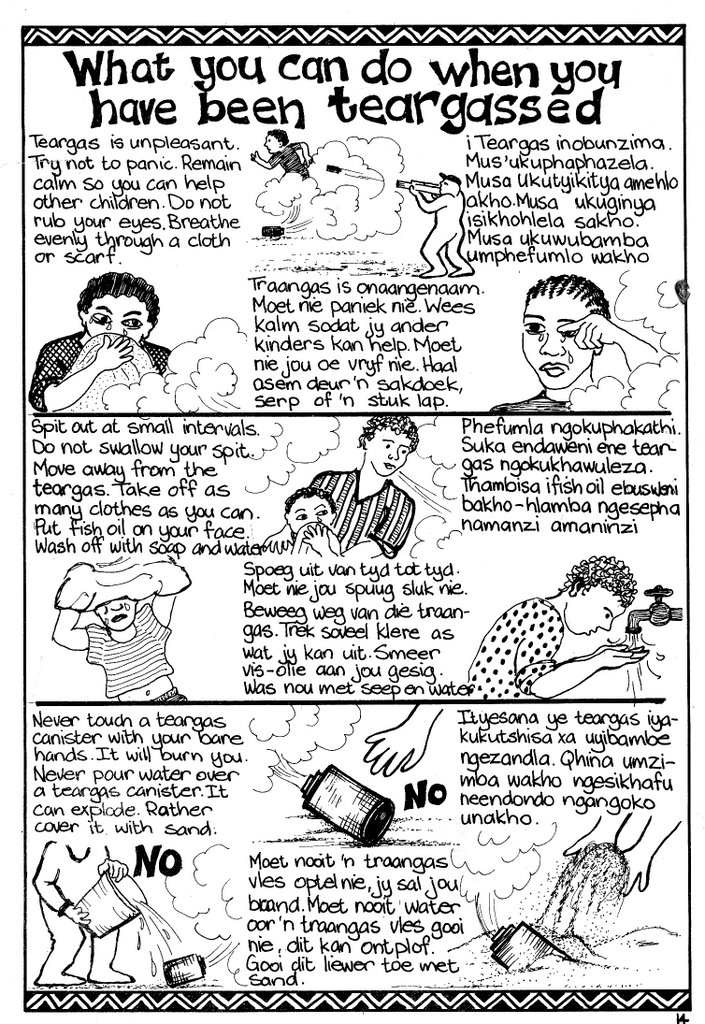
Molo Songololo is a South African children's magazine was started during the Apartheid years. It was in three languages: English, Xhosa and Afrikans. One of their articles was about how to protect yourself from teargas.There is now a television program that evolved from the magazine. This is from their web page:
"One of the central partners in The Molo Show is a Cape based children's organisation that was established in the 1980's. For the past 17 years they have focused their energies on children's rights issues and education. Molo Songololo's current magazine distribution is predominantly in in the urban and peri-urban areas of the Western Cape. School teachers use the magazine as an educational resourse and Molo Songololo issues Educational Manuals based on specific themes. The Manuals consist of educational topics, social issues, history, activities, pazzles and games.

Molo's growth has partially been linked to a deep commitment to seeing real development for children in the socio-political arena. As an organisation dedicated to children, Molo Songololo ensures that the voices of children -especially those from the poorer socio-economic backgrounds are heard. At present, Molo Songololo is distributed predominantly in the Western Cape. The magazine has the potential to grow nationally as a vehicle for education."
There is a wonderful discussion of the importance of this little magazine during the apartheid struggles. It was discussed in the hearings for the Truth and Reconciliation Commission: http://www.doj.gov.za/trc/special/children/claassen.htm

Wednesday, August 22, 2007

Radio Rootz

Renaissance Village is the largest FEMA trailer park in the country with over 500 families (built by The Shaw Group, a large Louisiana firm cozy with Bush, on a no-bid contract after Katrina). The residents are understandably distrustful of outsiders, especially journalists. But there is an amazing youth center there and Abdulai Bah and Deepa Fernandes from People’s Production House have, over time, been welcomed into the park’s community as allies. This is a short video made by Big Noise Films producer, Jacquie Soohen, shot and edited in one day.
For more information http://breitbart.wordpress.com/2007/08/21/peoples-production-house-in-new-orleans/

Sitemeter